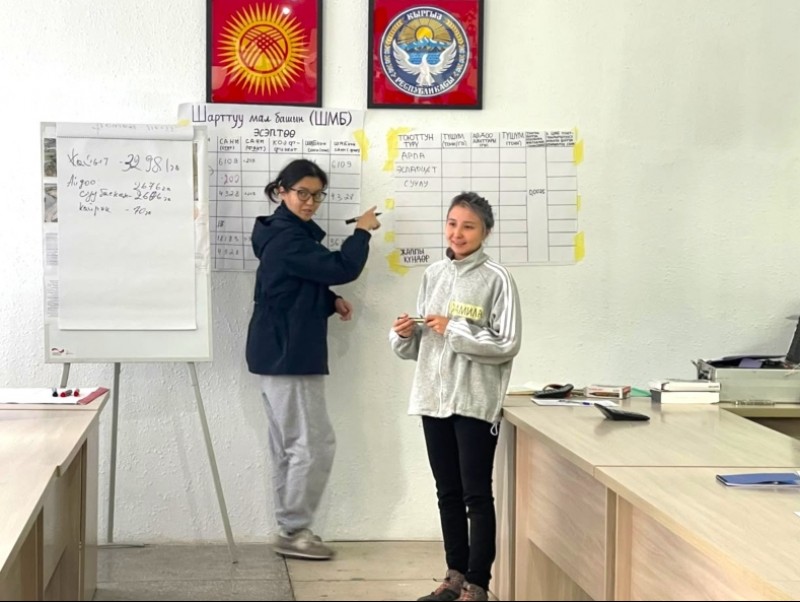
Participants of the Training for Trainers (ToT), which took place in Bishkek from September 28 to October 1, 2026, applied their newly acquired knowledge and skills in practice during seminars held in the project’s pilot areas.
As a reminder, the training for young specialists, representatives of partner organizations, and activists from the public organizations Ala-Too Bugu, Ular, and the Zhargylchak Agro cooperative from the Issyk-Kul region was organized to enhance their knowledge of pasture management and develop their skills in facilitating seminars for villagers.
The key speakers were leading experts from the “CAMP Alatoo” PF. The event was held within the framework of the project "Adaptation of Migratory Mammals to Climate Change in Central Asia" (CAMCA), implemented by the “CAMP Alatoo” PF with support from the International Climate Initiative (IKI) and the United Nations Environment Programme (UNEP).
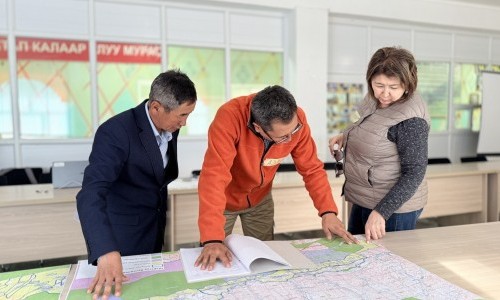
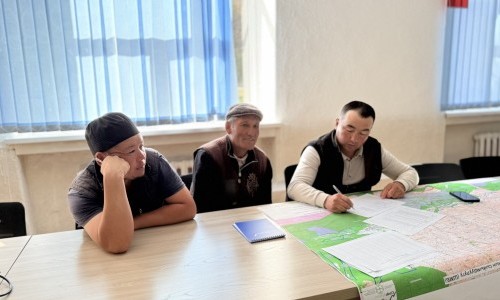
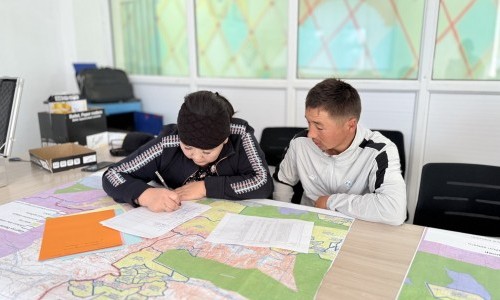
Using the L4S (Learning for Sustainable Development) seminar methodology, the young specialists facilitated seminars on developing pasture use plans that incorporate ecological corridors in the project area: the ayyl aimaks (rural sub-districts) of Dobolu (Naryn District, Naryn Region), Karakol (Ak-Suu District, Issyk-Kul Region), and Kun-Chygysh (Tong District, Issyk-Kul Region).
The seminars brought together between 20 and 30 participants, including representatives of ayyl okmotus (local municipal administrations), local councils, municipal enterprises, and veterinary services, as well as shepherds, livestock breeders, and other resource users. Acting as moderators and co-moderators, the novice trainers conducted practical sessions on converting livestock numbers into standardized livestock units (LU), forage production, assessing feed requirements, and analyzing livestock herd growth dynamics.
Together with the participants, the novice trainers developed pasture use plans accounting for ecological corridors. The planning process factored in grazing schedules, pasture carrying capacity, and opportunities for redistributing livestock to reduce pressure on pastures and preserve the forage base for wildlife. During the seminars, the moderators also supported one another by switching roles and assisting the lead trainers from the “CAMP Alatoo” PF expert team.
According to the trainers, the main highlight of the seminars was their interaction and exchange of experience with local communities. As the novice moderators noted, the theoretical preparation gained during the ToT enabled them to structure the sessions effectively and engage attendees in collaboratively addressing the identified issues.
"The ToT theory helped us work effectively with livestock population data in practice and structure information in Excel spreadsheets. This made it possible to automate calculations and visually assess the pasture load level," shared Ulan Kylychbek uulu.
The moderators counted among their achievements delivering the material in the Kyrgyz language, gathering participant feedback, and explaining complex concepts in accessible terms using real-life examples from rural communities. They also applied moderation techniques such as group work and collaborative exercises.
"I managed to conduct my session in Kyrgyz. Although I have a slight accent, the participants were very understanding and patient with me. The moderation techniques we learned during the ToT helped build the session sequentially — explaining step-by-step where we were heading next. The participants themselves know a lot and understand the local situation well, so the moderator's task is to help them systematize their knowledge, formulate the problems, and move toward concrete solutions," said Zhamila Suranaeva.
"It is not easy to hold an audience's attention nowadays. People are not always ready to invest a lot of time in lengthy training sessions, so learning must be accessible, practical, and not overloaded. It is crucial for participants to understand the practical value the acquired knowledge will bring to their daily lives," added Nurkyz Sarnogoeva.
"We not only learned a lot, but we also realized how vital it is to find common ground with local residents. The seminars are structured so that participants can look at their daily lives from a fresh perspective, see how overused their pastures are, and understand the consequences. Simple exercises help identify the main challenges pasture users face and listen to the solutions they propose themselves. This is not a lecture, but practical work. I will be able to apply the acquired knowledge and methods in my future work with my community," noted Talant Usupov, a representative of the public organization Ala-Too Bugu.
After communicating with local residents and conducting field visits, the specialists became fully convinced of how critical the issue of pasture degradation is for the country. This led them to the conclusion that building capacity and transferring knowledge to rural communities is essential work.
"Community training is an integral component of project activities. When it comes to sustainable pasture management, it is vital for people to understand the value of this resource. Pastures are not just grazing areas; they are the foundation of households and a primary source of income, and a responsible attitude toward them must be shaped through collaborative discussion," shared Aibike Tolosun kyzy.
The initial experience of these novice moderators demonstrated that combining preliminary theoretical training with practical communication with villagers helps cultivate a new generation of experts in natural resource management.


Итоги пастбищного сезона 2018 года были подведены на очередном заседании районной пастбищной комиссии (РПК).
More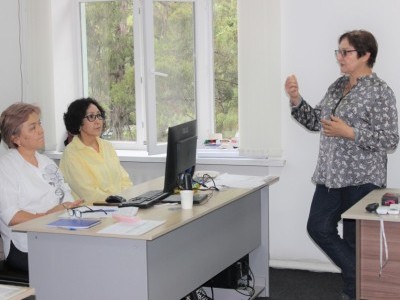
The development of the unified method, "Monitoring Pastures at the Local Level," is nearing completion.
More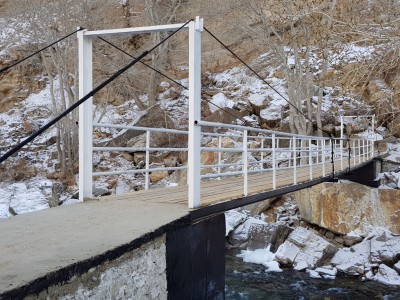
Четыре новых моста построены в 2018 году в Кыргызстане при поддержке ОФ “CAMP Алатоо” и Швейцарской ассоциации “Памирские...
More