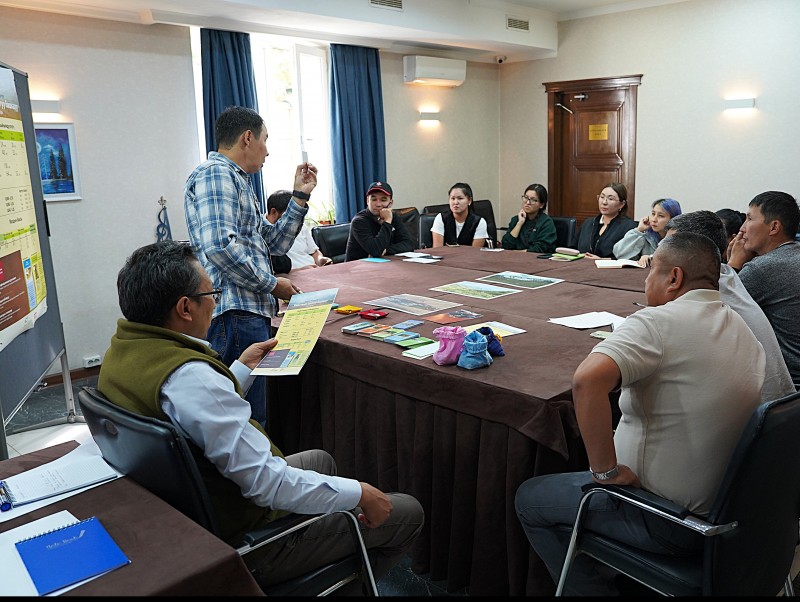
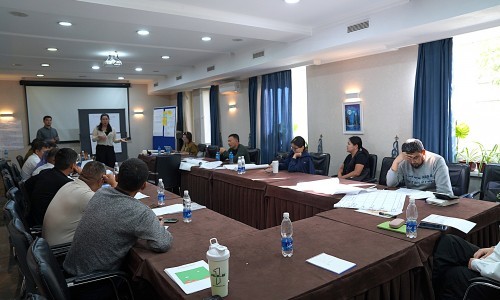
Specialists from the "CAMP Alatoo" PF, community activists from "Ala-Too Bugu" and "Ular", representatives of the "Zhargylchak Agro" cooperative from the Issyk-Kul region, project partners, and working group members completed training on workshop facilitation for community-based pasture management with a focus on ecological corridors.
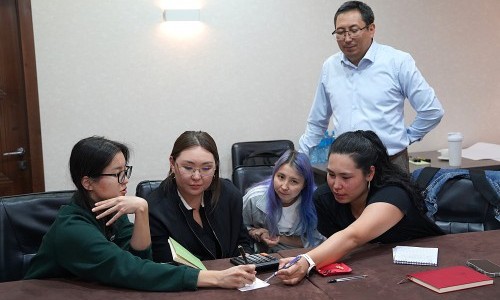
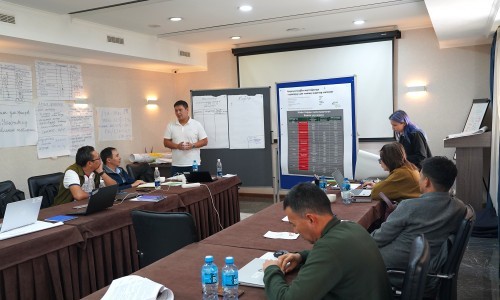
During the week-long Training of Trainers (ToT), experts from "CAMP Alatoo" PF served as primary trainers. Under their guidance, future facilitators explored moderation tools and techniques, mastered audience engagement skills, and studied sustainable resource management to share these insights with local residents.
"This fast-track training will be consolidated in practice when participants conduct real-world workshops. The training module follows a standard model that Foundation experts have used for rural community training for many years. It combines theoretical knowledge about pastures with facilitation tools. Our goal is not just to transfer information, but to build a solid foundation and confidence in young facilitators so they can navigate any audience with ease," noted PF "CAMP Alatoo" specialists.
The first block of the training focused on the art of moderation and facilitation. Mentors from "CAMP Alatoo" PF shared their practical experience and insights with the participants.
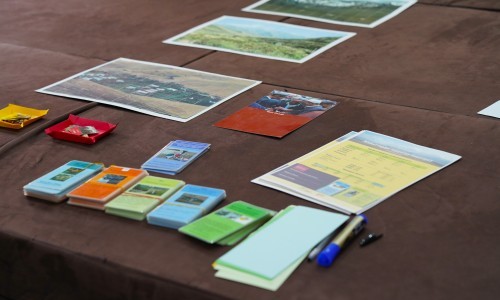
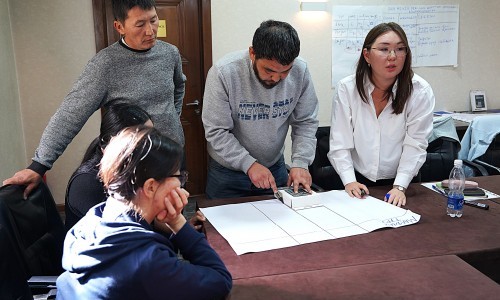
As part of the L4S ("Learning for Sustainability") module applied to pasture management, participants examined the key roles and functions of a moderator, alongside interactive engagement techniques such as brainstorming, small group work, card exercises, and visual tools.
The module addressed core expectations raised by participants at the start of the course: keeping the audience engaged, communicating effectively, resolving conflict situations, and gathering constructive feedback.
The second day covered the technical aspects of sustainable pasture use. Participants examined topics including pasture carrying capacity, livestock unit calculations, land degradation challenges, and the role of ecological corridors in ecosystem preservation.
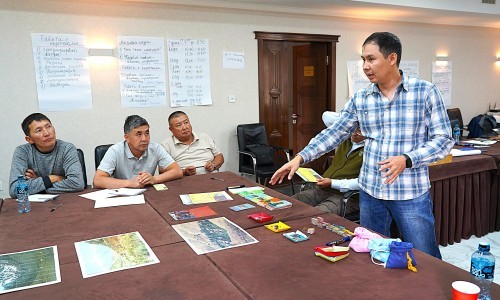
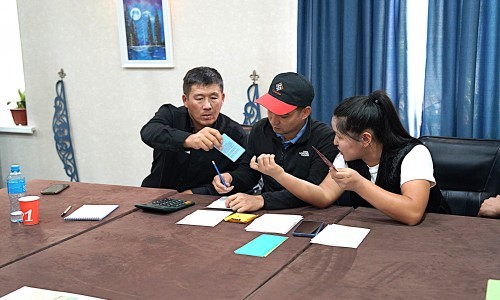
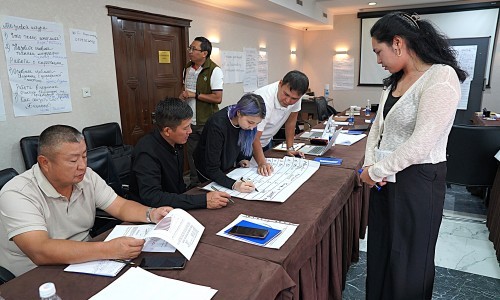
A key interactive highlight was the "Pasture Management" board game. Divided into teams representing "household units," participants stepped into the shoes of local farmers and pastoralists. Their objective was to design a grazing strategy that balances profitability from meat and dairy production with long-term pasture conservation. Throughout the game, teams navigated external pressures, including weather unpredictability and climate change impact.
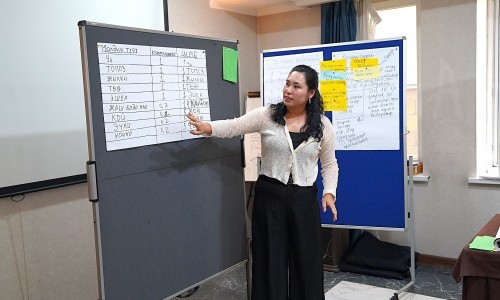
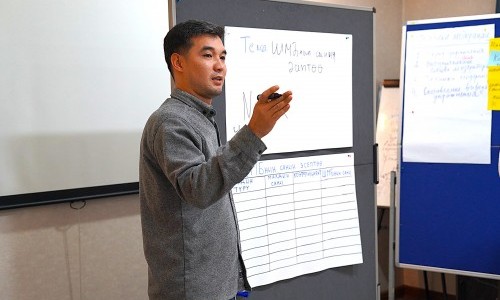
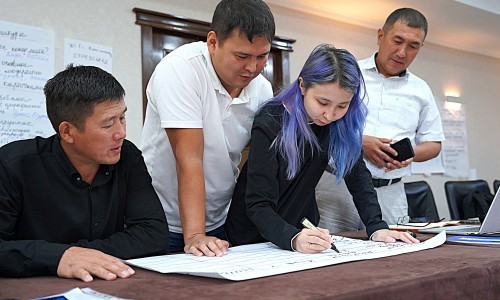
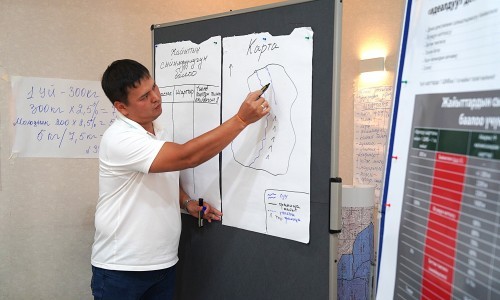
The training culminated over the final two days, as participants assumed the roles of lead moderators and co-moderators to facilitate practical exercises for their peers. All presentations were delivered in the state language, reflecting the primary language used in field workshops with rural communities.
During these practical sessions, speakers utilized a full toolkit of facilitation techniques: group work with peer presentations, visualization on flipcharts, and Q&A discussion sessions.
Following the exercises, the co-moderation pairs conducted self-evaluations of their performance.
"It is still a challenge for me to memorize all the pasture terminology, so in my presentation I tried to explain what a 'livestock unit' means using simple, accessible terms. I believe proficiency will come with practice," shared Nurkyz Sarnogoeva, Project Specialist at "CAMP Alatoo" PF.
Participants also noted minor challenges with role distribution between lead moderators and assistants, as well as managing moments that required additional clarification for the audience.
"CAMP Alatoo" PF mentors praised the efforts of all participants, highlighting their thorough topic preparation, seamless teamwork in pairs, and strong engagement with the audience.
From October 5 to 10, training graduates will apply their skills in the field. Working alongside experienced mentors, they will act as lead moderators and co-moderators in community workshops across the Ak-Suu and Ton districts of the Issyk-Kul region, as well as in the Naryn region. They will assist local communities in formulating actionable pasture use and management plans.
The training is being held as part of the project " Adaptation of Migratory Mammals to Climate Change in Central Asia” (САМСА), implemented by “CAMP Alatoo” PF with support from IKI and UNEP.

Итоги пастбищного сезона 2018 года были подведены на очередном заседании районной пастбищной комиссии (РПК).
More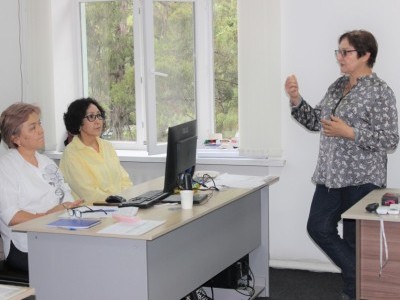
The development of the unified method, "Monitoring Pastures at the Local Level," is nearing completion.
More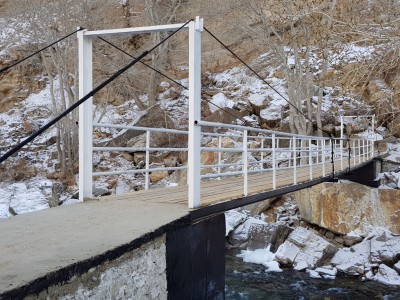
Четыре новых моста построены в 2018 году в Кыргызстане при поддержке ОФ “CAMP Алатоо” и Швейцарской ассоциации “Памирские...
More