In 2025, СAMP Alatoo launched the project “Women of Ferghana Valley at the Frontlines of Climate Resilience, Adaptation and Peace.” The initiative is being implemented in the Osh, Jalalabad, and Batken regions with the support of UNDP and the Peacebuilding Fund. Its main goal is to support rural communities across 20 Aiyl Okmotu in the context of climate change. This involves assisting communities in managing water resources, reducing conflicts over natural resources, and increasing women’s participation in decision-making at the Aiyl Okmotu level.
At the start of the project, methodologies for conducting focus groups and trainings were developed. Out of the total number of Aiyl Okmotu, 10 key pilot communities were selected for more in-depth engagement.
Focus Groups: Understanding Community Concerns
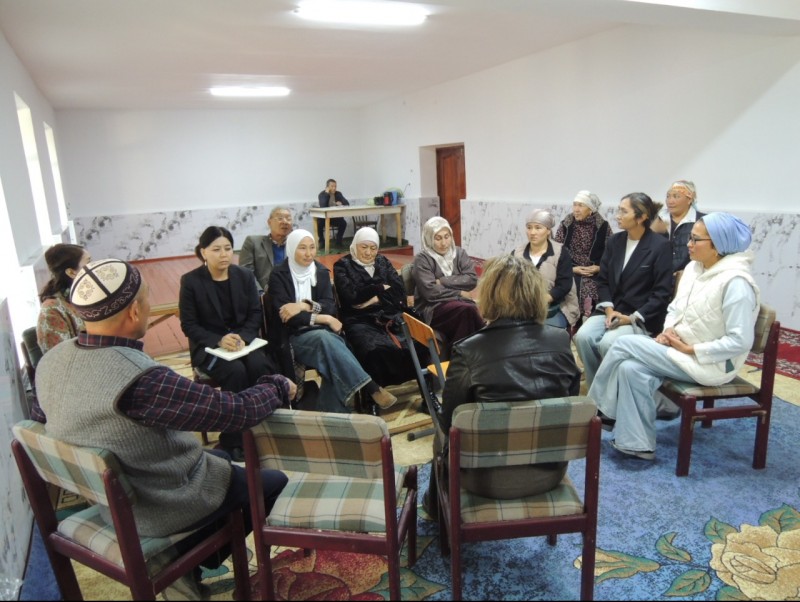
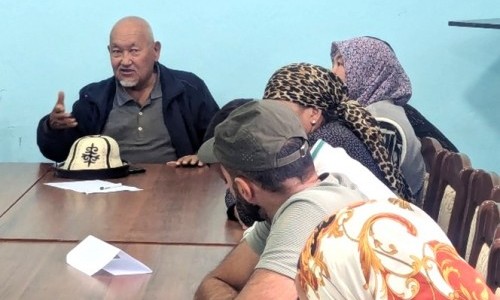
СAMP Alatoo specialists held discussions in focus groups across all 20 Aiyl Okmotu, involving 260 participants, including representatives of local self-governance bodies, municipal enterprises, farmers, natural resource users, and local activists. Women made up at least 30% of participants.
The purpose of the discussions was not only to collect information but also to give villagers an opportunity to identify issues related to climate change and natural resources themselves. Project specialists asked participants to identify climate-vulnerable areas in their villages, existing conflicts over irrigation water, the role of women in resource management, their influence on problem-solving, and their training needs.
During the discussions, villagers described how climate change affects their daily lives. It was revealed that nearly all Aiyl Okmotu are experiencing droughts and water shortages, which increases tensions over resource allocation and affects household incomes and food security. Women also face barriers in accessing natural resources, and their role in decision-making is limited. Therefore, one of the focus group objectives was to explore how women’s participation in decision-making could strengthen community resilience, build trust, and support peacebuilding under changing climatic conditions. Regarding training, residents expressed interest in practical knowledge and skills to understand the linkages between climate change, peacebuilding, and gender, as well as water resource management, adaptation measures, and developing local initiatives.
Trainings: From Discussion to Action
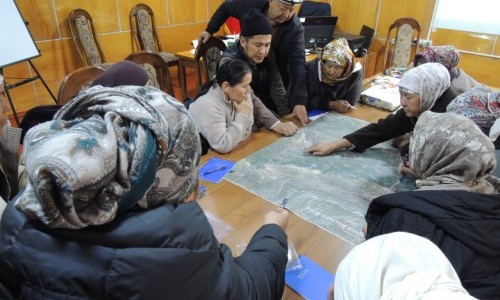
The results of the focus group discussions formed the basis for training activities. In 10 pilot Aiyl Okmotu, two-day trainings on scenario planning and climate adaptation were conducted, incorporating peacebuilding and gender equality considerations.
A total of 173 participants attended the trainings, including local government representatives, farmers, and activists, with nearly 100 women among them. With the support of the project team, participants learned to assess climate risks, work with climate fluctuation scenarios, and develop practical adaptation measures. Special attention was given to integrating these measures into Aiyl Okmotu socio-economic development plans and reducing conflicts over natural resources.
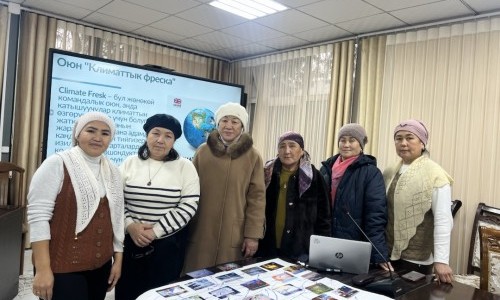
To facilitate understanding, trainers used various tools. In particular, the AAVA tool, developed by СAMP Alatoo specialists, clearly visualizes where and which climate threats are most critical and helps identify priority adaptation measures. In addition, participants explored climate-related challenges through the interactive game “Climate Fresco,” which demonstrates cause-and-effect chains, encourages problem-solving, and develops teamwork skills.
Training participants emphasized that climate adaptation and natural resource management should involve all social groups—women, the elderly, smallholder farmers, and members of vulnerable households. Residents recognized that gender equality and inclusivity principles must be considered when addressing natural and climate-related challenges, while also noting the need for additional explanations adapted to local conditions.
The trainings demonstrated that climate adaptation must integrate climate, irrigation, gender, and peacebuilding considerations. Droughts, water scarcity, and land degradation exacerbate poverty, inequality, and the risk of resource-related conflicts, particularly over water. Vulnerability assessments showed that rural areas currently implement insufficient adaptation measures but highlighted the presence of traditional knowledge, community cohesion, and readiness to take action.

Итоги пастбищного сезона 2018 года были подведены на очередном заседании районной пастбищной комиссии (РПК).
More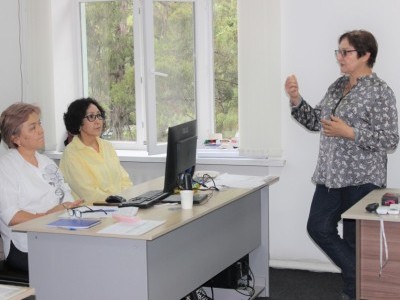
The development of the unified method, "Monitoring Pastures at the Local Level," is nearing completion.
More
Четыре новых моста построены в 2018 году в Кыргызстане при поддержке ОФ “CAMP Алатоо” и Швейцарской ассоциации “Памирские...
More