The OECM concept — or Other Effective Area-Based Conservation Measures — is part of the One Health project implemented by the СAMР Alatoo PА with the support of the International Climate Initiative (IKI) and the International Union for Conservation of Nature (IUCN).
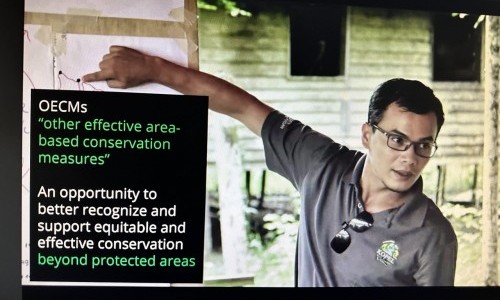
OECMs are geographically defined areas that are not officially designated as protected areas but are managed in ways that ensure the long-term and effective in-situ conservation of biodiversity, as well as associated ecosystem functions and cultural values.
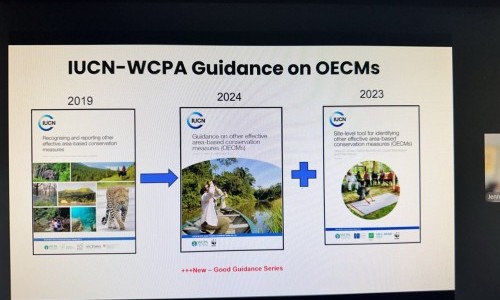
The concept of OECMs and their definitions in various materials and programs were discussed during the webinar “Beyond Protected Areas: Understanding the Role of OECMs”, which brought together representatives of organizations working in nature and biodiversity conservation. The training for participants from different countries, including Central Asia, was organized by IUCN within the framework of the One Health project.
According to Tatyana Ivanova, Nature Conservation Projects Manager at IUCN, the link between OECMs and the core idea of One Health — ensuring the health of people and animals through the prevention of zoonotic diseases — lies in the fact that “well-managed OECMs strengthen natural barriers that help prevent zoonotic outbreaks, reduce disease transmission, and increase the resilience of flora and fauna to climate change and pandemics.”
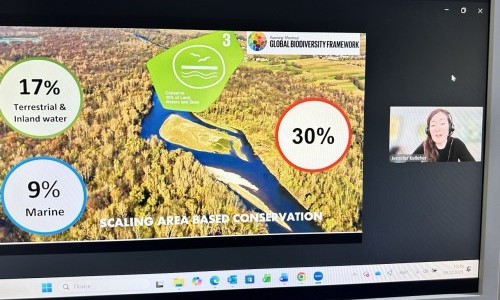
Jennifer Kelleher, IUCN Programme Lead on Governance, Equity and Rights, outlined the criteria for identifying OECMs. “Such areas are considered within a landscape context and must have clear geographic boundaries, a governance system, and decision-makers whose actions influence biodiversity conservation. OECMs can also be located adjacent to protected areas and complement them by strengthening ecosystem connectivity and expanding ecological corridors,” she noted.
According to data presented during the webinar, more than 6,500 OECMs are currently recorded in 16 countries worldwide. These areas cover 1.1% of terrestrial land and 0.24% of marine territories. Emily Howland from the UK Centre for Ecology & Hydrology emphasized that these figures reflect the growing recognition of the role of OECMs in global biodiversity conservation strategies. Participants were introduced to successful examples of OECMs with different governance models from Africa, Canada, Japan, and other countries.
Among the challenges related to OECM implementation, IUCN experts highlighted that such areas are often viewed only in a local context. There is also a risk of misuse of the concept, when sites are incorrectly identified or presented as OECMs, for example by private landowners without sufficient justification. Tools for identifying and assessing OECMs, which are required for their recognition, were also presented during the webinar.
The webinar helped participants strengthen their understanding of global OECM frameworks, learn about assessment and monitoring tools, and explore international experiences in applying this approach.

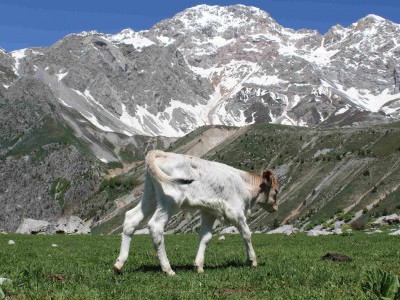
Итоги пастбищного сезона 2018 года были подведены на очередном заседании районной пастбищной комиссии (РПК).
More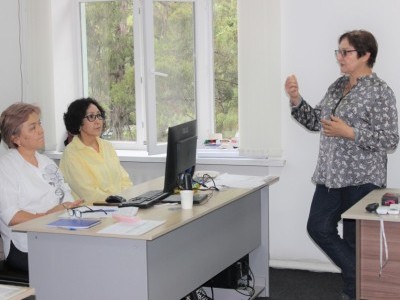
The development of the unified method, "Monitoring Pastures at the Local Level," is nearing completion.
More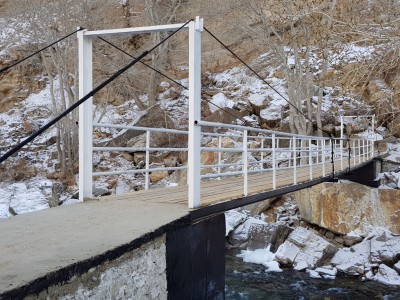
Четыре новых моста построены в 2018 году в Кыргызстане при поддержке ОФ “CAMP Алатоо” и Швейцарской ассоциации “Памирские...
More