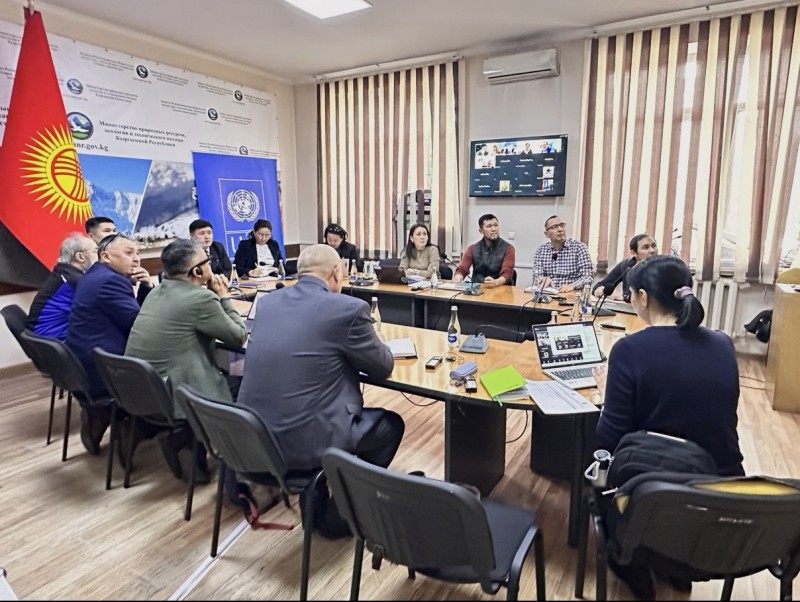
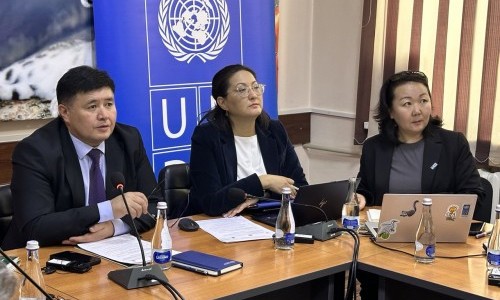
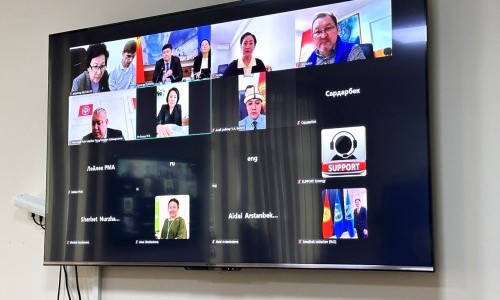
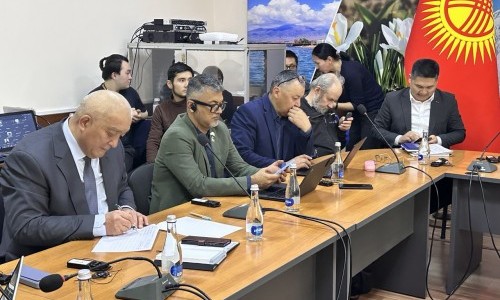
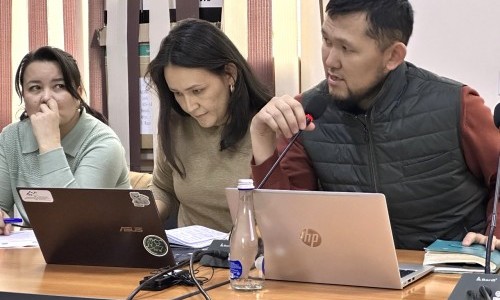
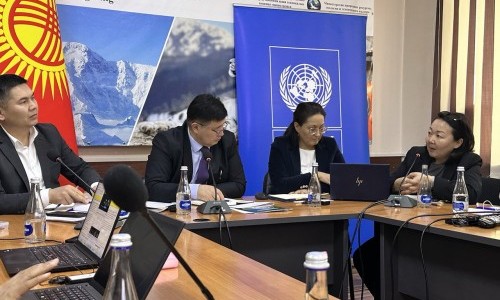
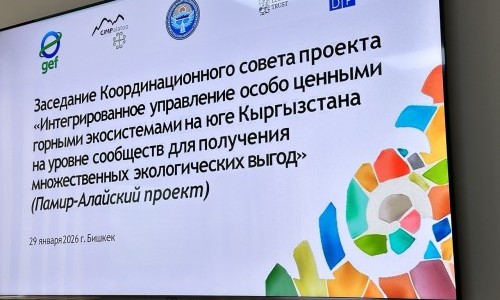
The approval of the 2025 results and the work plan for the current year was the key focus of the first meeting of the Coordination and Advisory Committee (CAC) in the new year under the project “Integrated community-based management of high value mountain ecosystems in southern Kyrgyzstan for multiple benefits”. The project is implemented with the support of the Global Environment Facility (GEF) and UNDP in the Osh, Batken, and Naryn regions.
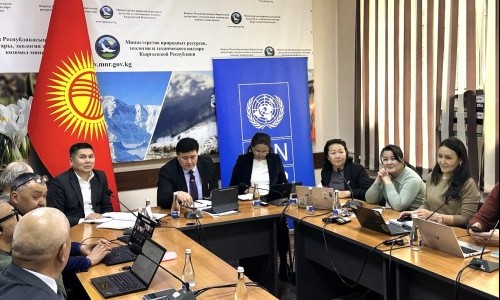
The CAC includes senior officials of the Ministry of Natural Resources, Ecology and Technical Supervision of the Kyrgyz Republic, district akims from the project areas, representatives of UNDP and FAO, civil society organizations, as well as scientists from the National Academy of Sciences of the Kyrgyz Republic. It should be noted that the Council members first convened in November last year to review the interim results of the initiative.
The project covers the Pamir-Alay landscape, with a total area of 3.8 million hectares, and aims to introduce integrated biodiversity and ecosystem management, restore degraded lands, and enhance the climate resilience of natural resources and local livelihoods. The project is being implemented with the involvement of representatives of the Ministry of Natural Resources, Ecology and Technical Supervision of the Kyrgyz Republic, UNDP specialists, the “САМР Alatoo” PF, and the Snow Leopard Trust.
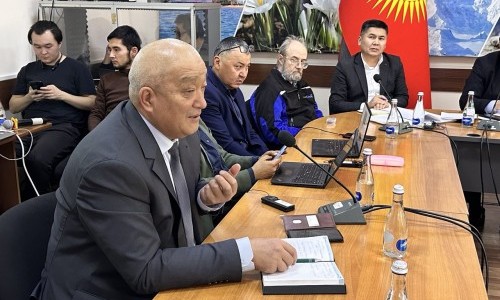
The CAC meeting was chaired by Almaz Musaev, Deputy Minister of Natural Resources, Ecology and Technical Supervision of the Kyrgyz Republic. Umut Zholdosheva, UNDP Project Coordinator, presented an overview of activities implemented at the end of 2025 and outlined key priorities for the coming year. Among them is the development of scientific, environmental, and economic justifications for the establishment of new specially protected natural areas (SPNAs) within the project territory. A dedicated working group has been established for this purpose.
Planned activities also include an inventory of 17 wildlife reserves in Osh and Batken regions, as well as an assessment of the capacity and performance of staff working in five SPNAs.
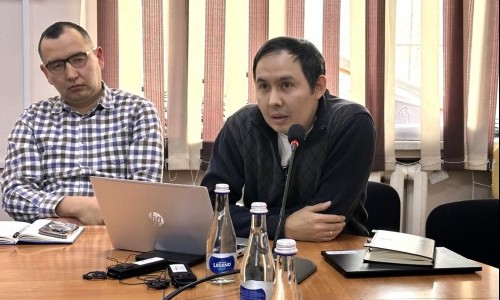
The “САМР Alatoo” PF, team responsible for ecotourism development in SPNAs, as well as the pasture and forest components of the project aimed at generating sustainable income for local communities, presented the results of their work. According to Maksat Miynazarov, Project Coordinator at “САМР Alatoo” PF, pasture monitoring was conducted in 28 pilot aiyl aimaks, and pasture boundary maps were developed. The collected data—including pasture carrying capacity calculations, productivity indicators, and geospatial information—will be incorporated into the final project report.
As early as the first week of February, project specialists will conduct training seminars for rural communities in 16 aiyl aimaks located around SPNAs in the Osh and Batken regions. The trainings will focus on the development of Pasture Use and Management Plans (PUMPs). In this regard, Almaz Musaev emphasized the importance of support from district akims in facilitating the trainings and ensuring the participation of relevant specialists from municipal enterprises.
Members of the CAC were also informed about the progress of updating the “Electronic Jaiyt Committee” system. Once finalized, the system is planned to be piloted in five to six aiyl aimaks, followed by training sessions for specialists of the Veterinary Service of the Ministry of Agriculture of the Kyrgyz Republic.
The implementation of the forest component of the project was presented by Zhyrgal Kozhomberdiev, Program Manager for Land Resource Management at the “САМР Alatoo” PF. Key activities include the launch of work on a methodology for identifying High Conservation Value Forests (HCVF), information meetings with forestry enterprises, completion of the Forest Management Information System (FMIS), as well as the establishment of nurseries in forestry enterprises of the Alay and Leilek districts and the provision of high-quality planting material.
Significant progress has also been achieved in the development of ecotourism as a source of sustainable income for local communities. In particular, two methodologies were developed: one for environmental and tourism-based landscape assessment to economically justify the establishment of SPNAs, and another for determining the tourism and recreational carrying capacity of SPNAs. Both methodologies were tested and validated against real conditions using the Kara-Shoro and Kyrgyz-Ata SPNAs in southern Kyrgyzstan as pilot sites. Following finalization and approval, specialists from the Department of Biodiversity Conservation and SPNAs will receive training on their application.
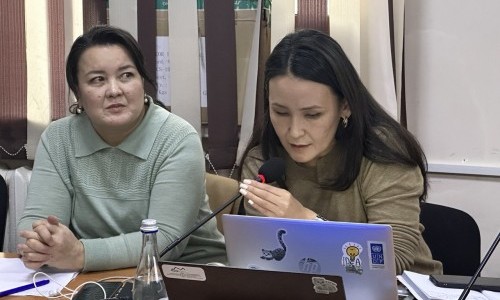
In addition, a Small Grants Programme (SGP) was announced for communities in nine aiyl aimaks. Applicants will be able to seek funding for ecotourism development initiatives. As noted by Aliya Ibraimova, Project Coordinator at the “САМР Alatoo” PF, the SGP implementation guidelines have been approved by the Ministry of Natural Resources, Ecology and Technical Supervision of the Kyrgyz Republic. The results of the grant competition will be finalized in February by a commission comprising representatives of the Ministry’s Department of Biodiversity Conservation, UNDP, and district akims. In early spring, selected grantees will receive funding and begin implementing their mini-projects. Over the following six months, the SAMR Alatoo project team will provide ongoing support to local communities, including training in ecotourism development, hospitality, and related skills.
During the discussion, Almaz Musaev inquired about the results of testing the methodologies and challenges related to their implementation at the local level. Aliya Ibraimova noted that the methodologies were adapted and simplified for SPNA conditions; however, the testing revealed insufficient data collection on visitor numbers. She also emphasized the need to include maps of eco-trails, horseback routes, and hiking trails in the methodologies. “Much depends on the quality of SPNA management and infrastructure, including the availability of roads, benches, and parking areas,” she emphasized.
Following the meeting, the members of the Coordination and Advisory Committee approved the reports and endorsed the plans for 2026, taking into account the recommendations put forward.

Итоги пастбищного сезона 2018 года были подведены на очередном заседании районной пастбищной комиссии (РПК).
More
The development of the unified method, "Monitoring Pastures at the Local Level," is nearing completion.
More
Четыре новых моста построены в 2018 году в Кыргызстане при поддержке ОФ “CAMP Алатоо” и Швейцарской ассоциации “Памирские...
More