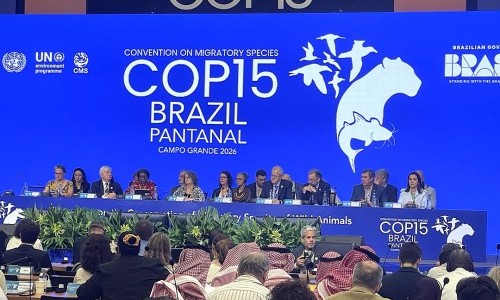
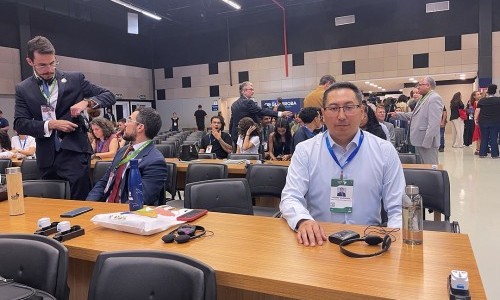
This week, from March 23 to 29, 2026, the attention of the global environmental community is focused on the Brazilian city of Campo Grande. The city is hosting a landmark event — the 15th Conference of the Parties (COP15) to the Convention on the Conservation of Migratory Species of Wild Animals (CMS). Under the unifying theme "Connecting Nature to Sustain Life," the event has brought together government leaders, leading scientists, conservationists, and representatives of indigenous peoples from across the globe.
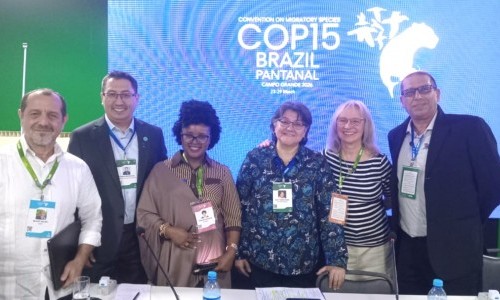
Specialists from the CAMP Alatoo PF are actively participating in this high-level forum, presenting Kyrgyzstan’s unique experience in establishing migratory routes and maintaining the balance between wildlife and human activity to the international community.
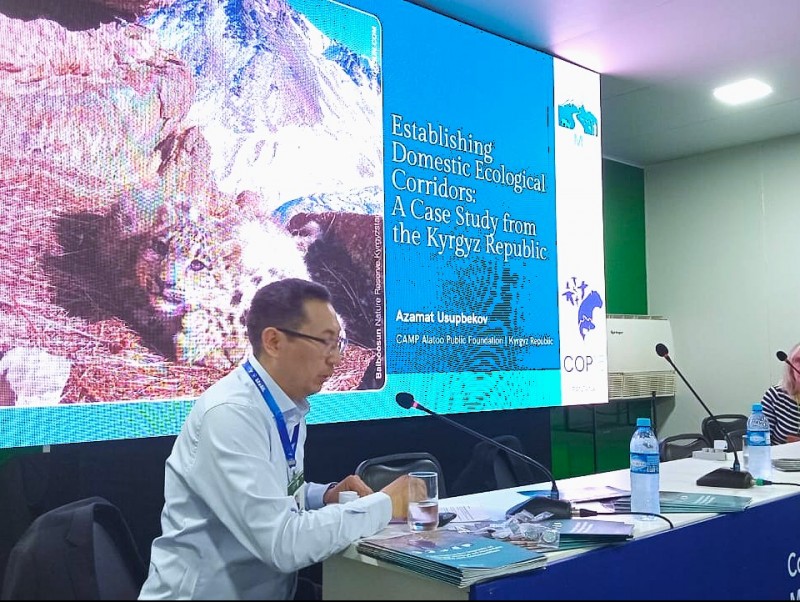
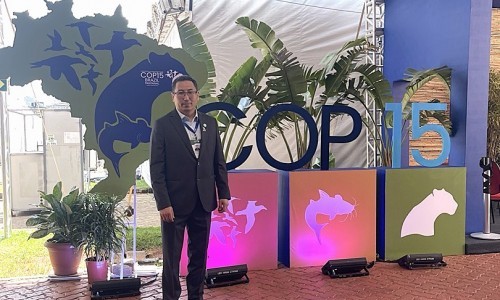
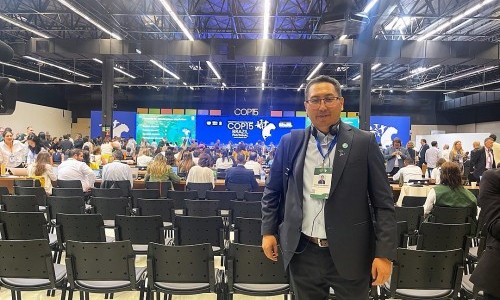
As part of a side event organized by the United Nations Environment Programme (UNEP), Foundation Project Coordinator Azamat Usupbekov delivered a presentation. He spoke in detail about the formation of a network of ecological corridors in our republic. Although nearly 12% of Kyrgyzstan's territory is already covered by a network of nature reserves and parks, this is insufficient for the full protection of migratory species such as the snow leopard or argali, whose natural routes extend far beyond protected areas. The expert drew particular attention to the state-supported creation of the "Ak-Ilbirs" ecological corridor, spanning 800,000 hectares, which connects protected areas in the Issyk-Kul and Naryn regions. The boundaries of this corridor were determined based on scientific data and a digital model developed in collaboration with scientists from Humboldt University (Germany). Azamat Usupbekov emphasized the importance of working with local communities: residents were informed that the eco-corridor does not impose strict prohibitions but instead coordinates the activities of forestry enterprises, hunting concessions, and municipal entities. This ensures that the migration regimes of animals are not disturbed and that protective measures are integrated into local development plans, ultimately paving the way for a future unified transboundary corridor with Kazakhstan.
A second presentation by Azamat Usupbekov was dedicated to finding the "golden mean" between the conservation of eco-corridors and pasture management. At the heart of CAMP Alatoo’s approach is the recognition that wildlife, livestock, and people share a common space; therefore, conservation mechanisms must work effectively where life is most active. To ensure the coexistence of wild animals, livestock, and local residents, the Foundation applies various practical approaches and tools: from GIS mapping and satellite monitoring to field biomass measurements and surveys of herders. Practical monitoring within the "Ak-Ilbirs" eco-corridor confirmed the effectiveness of a rotational approach: when grazing is conducted such that livestock consumption does not exceed 60% of the grass, it promotes an increase in wildlife species. This not only preserves the forage base for rare species but also makes pastures more resilient to climate change, ensuring the long-term well-being of rural communities.
It is noteworthy that the conference venue is the unique Pantanal conservation area, considered one of the most dynamic and biologically valuable regions in the world. On the agenda of CMS COP15 is the fate of animals that cross international borders in search of food and breeding grounds, becoming a shared heritage and a common responsibility for all of humanity. The core message of the conference is that the ecological connectivity of ecosystems is vital not only for the survival of animals but also for the well-being of every person on the planet.

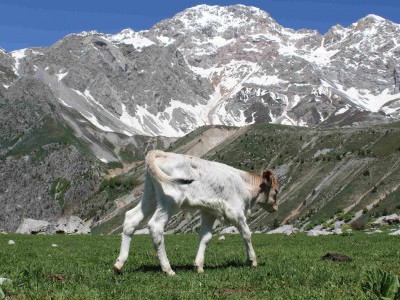
Итоги пастбищного сезона 2018 года были подведены на очередном заседании районной пастбищной комиссии (РПК).
More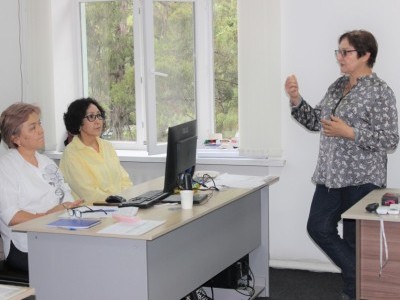
The development of the unified method, "Monitoring Pastures at the Local Level," is nearing completion.
More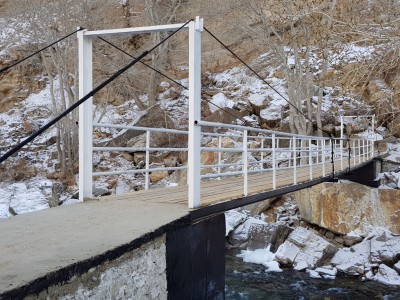
Четыре новых моста построены в 2018 году в Кыргызстане при поддержке ОФ “CAMP Алатоо” и Швейцарской ассоциации “Памирские...
More