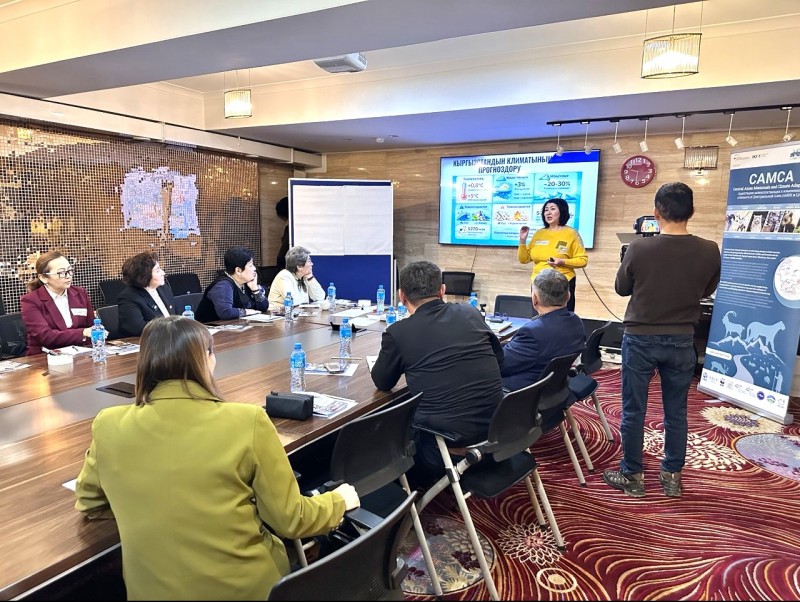
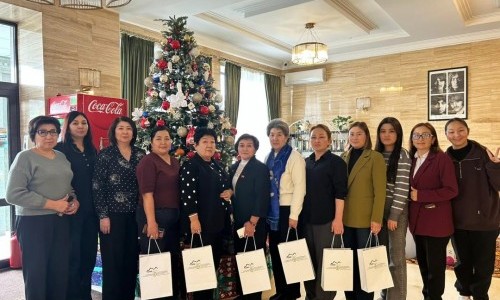
How can climate threats be assessed, their impacts anticipated, and—most importantly—this knowledge transformed into effective, practical solutions? This question was addressed during the practical training “Tools for Climate Risk Assessment and the Development of Adaptation Measures.” The training was organized and delivered by specialists of the САМР Alatoo PF within the framework of the project “Adaptation of Migratory Mammals to Climate Change in Central Asia” (САМСА), implemented with the support of IKI and UNEP.
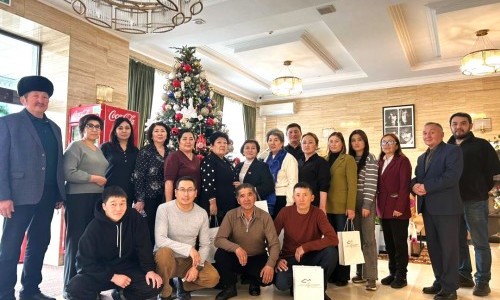
Participants of the training included representatives of the Department of Biodiversity Conservation of the Ministry of Natural Resources, Ecology and Technical Supervision of the Kyrgyz Republic, the National Agrarian University, ayil okmotu (local self-government bodies), municipal enterprises, specially protected natural areas, schools from the Issyk-Kul region—the project area—as well as local non-governmental organizations. This diverse composition of participants made it possible to combine managerial, scientific, and practical experience.
The main objective of the training was to strengthen the capacity of government bodies, local institutions, and NGOs in the assessment of climate risks and the development of adaptation measures. The focus was not only on theory, but also on practical tools that can be applied in everyday work—during planning processes, natural resource management, and the development of local socio-economic development plans.
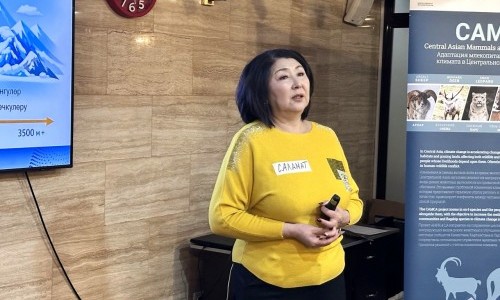
Specialists from the САМР Alatoo PF presented key climate challenges at both national and global levels and discussed their impacts on ecosystems and human populations. Particular attention was paid to climate change adaptation as one of the core elements of sustainable territorial development.
During the training, participants were introduced to tools developed under the САМСА project, including IBEX, PAVA, AAVA, and the Open Standards for the Practice of Conservation. These tools enable the identification of climate risks, the assessment of vulnerability of specially protected natural areas, pastures, and ecosystems, and the planning of effective conservation and adaptation measures.
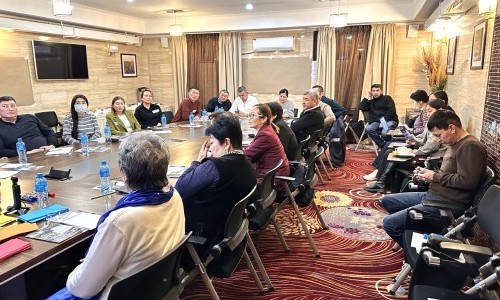
The practical component of the training was conducted through group work. Participants practiced applying vulnerability assessment tools and independently developed adaptation measures tailored to real local conditions and challenges. This approach helped bridge theory and practice—from the management of protected areas to engagement with local communities and educational institutions.
As a result of the training, participants strengthened their understanding of key principles of climate change and adaptation and gained practical skills in climate risk and ecosystem vulnerability assessment. According to the trainers, such capacity-building activities lay the foundation for informed climate adaptation decision-making based on reliable data, effective tools, and the real needs of communities and territories.






Итоги пастбищного сезона 2018 года были подведены на очередном заседании районной пастбищной комиссии (РПК).
More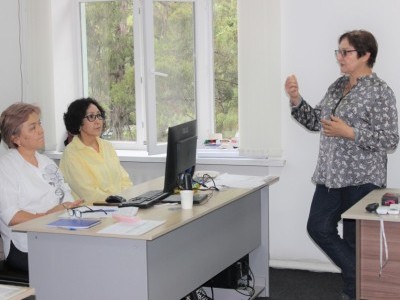
The development of the unified method, "Monitoring Pastures at the Local Level," is nearing completion.
More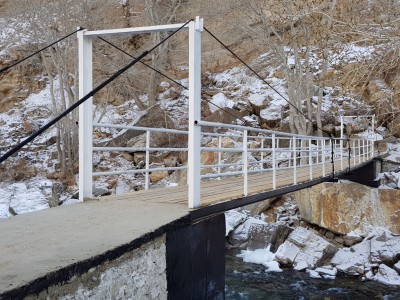
Четыре новых моста построены в 2018 году в Кыргызстане при поддержке ОФ “CAMP Алатоо” и Швейцарской ассоциации “Памирские...
More