How do residents of Chui Region and Bishkek heat their homes, and are they willing to invest in energy efficiency? The answers to these questions formed the basis of a sociological survey conducted by specialists from the CAMP Alatoo PF as part of the project “Green Homes Central Asia Initiative: Building Healthy, Climate-Resilient Homes in Central Asia”. The project aims to promote climate-resilient housing in the region.
Based on the survey results, an analytical report was prepared presenting key findings on barriers, motivations, and the level of public awareness regarding energy efficiency and home insulation.
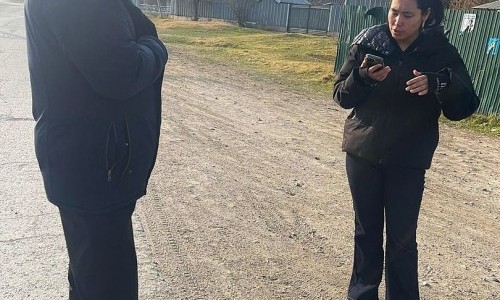
The study covered the city of Bishkek and three districts of Chui Region—Alamedin, Issyk-Ata, and Sokuluk. The survey was conducted in the rural municipalities (aiyl aimaks) of Kun-Tuu, Manas, Baytik, Besh-Kungey, Uzun-Kyr, and Zhayylma, as well as in the residential areas of Kok-Zhar and Jal, which serve as pilot territories of the project.
In total, 460 households were surveyed. This number closely matches the planned sample size and ensures the reliability and accuracy of the results.
Household vulnerability and income levels
According to the survey results, СAMР Alatoo PF specialists concluded that the majority of surveyed households belong to vulnerable social groups.
The data show that about 40% of respondents identify themselves as socially vulnerable. Among them are young families (15%), large families (9%), families with persons with disabilities (about 5%), and households headed by women (around 5%). Overall, nearly one in four households is headed by a woman. The median monthly household income is around 40,000 KGS, while about one quarter of households live on less than 21,000 KGS per month.
Heating as one of the largest household expenses
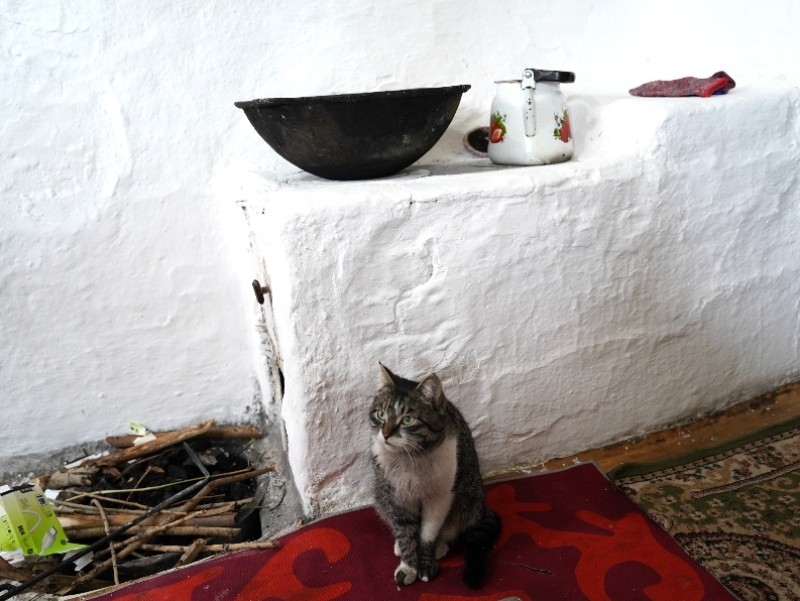
For most families, heating remains a significant financial burden. The survey showed that 358 households (nearly 78% of respondents) use coal as their primary heating fuel. On average, households spend about 20% of their monthly budget on heating, and for families with incomes below 25,000 KGS, this share can reach 30–40% during winter.
Despite the ongoing gasification of rural areas, many residents continue to rely on coal and firewood. The main reason is that switching to gas requires additional costs—such as connection fees, installation, and equipment—which are not always considered economically feasible.
Why homes remain poorly insulated
The study found that decisions about home insulation and housing modernization largely depend on household finances, the condition of the building, existing heating practices, and the level of awareness about energy-efficient solutions.
Interviews with residents revealed that almost 50% of homes lack proper ventilation, 16% have neither a chimney nor ventilation, 58% of residential buildings have uninsulated walls and roofs, and 60% of homes have floors that have never been insulated.
The main barrier to energy-efficiency improvements is a lack of financial resources, cited by 62% of households. Many families are unable to invest more than 100,000 KGS in insulation and home comfort without external support. In addition, residents often face (1) limited information about modern energy-efficiency solutions; (2) a lack of trust in their effectiveness; (3) insufficient access to clear and affordable financing mechanisms.
Energy efficiency as both an environmental and social issue
The results show that housing energy efficiency in the project area affects not only the environment but also the socio-economic well-being of households. Reducing heat loss through insulation of walls, roofs, floors, windows, and doors can significantly decrease fuel consumption, lower household expenses, and at the same time reduce carbon dioxide emissions.
For residents of six rural municipalities in Chui Region and the suburbs of Bishkek, this challenge has been addressed through the “Green Homes Central Asia Initiative: Building Healthy, Climate-Resilient Homes in Central Asia”. With technical support from the СAMР Alatoo PF, homes of socially vulnerable families were insulated. The work included thermal insulation of walls, ceilings, and roofs, as well as the replacement of windows—the parts of a house through which heat most often escapes.
After completing the insulation works, the project team continues to conduct monitoring to assess reductions in fuel and electricity consumption and to evaluate improvements in indoor microclimates. Specialists from the СAMР Alatoo PF will also prepare recommendations and practical solutions to help households reduce energy consumption without sacrificing comfort.
The project is supported by the Small Grants and Climate Innovation Fund (SGCIF) and funded by the United Kingdom government as part of its international development assistance. The Fund is part of the regional programme Climate Risk Management in Central Asia, implemented by the German Society for International Cooperation (GIZ).

Итоги пастбищного сезона 2018 года были подведены на очередном заседании районной пастбищной комиссии (РПК).
More
The development of the unified method, "Monitoring Pastures at the Local Level," is nearing completion.
More
Четыре новых моста построены в 2018 году в Кыргызстане при поддержке ОФ “CAMP Алатоо” и Швейцарской ассоциации “Памирские...
More