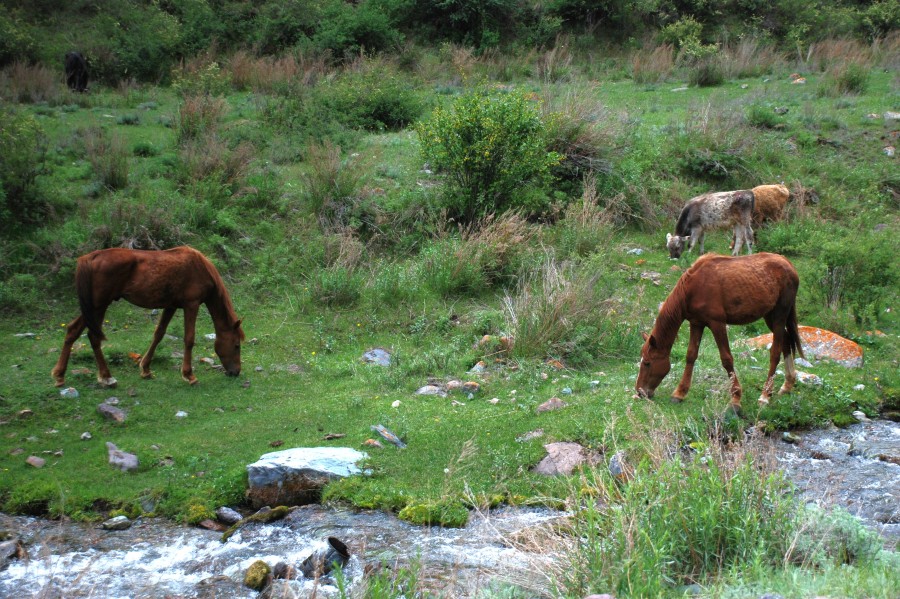
Approximately 12% of the country’s pastures—more than 1 million hectares—face water shortages. The situation is further aggravated by outdated and deteriorated infrastructure, including wells and boreholes, which previously supplied water to nearly one quarter of all watered grazing lands.
As small rivers alter their flow regimes and springs dry up, pasture ecosystems are experiencing critical water deficits.
In Kyrgyzstan’s mountainous terrain, livestock cannot travel long distances to access water because of steep slopes and rocky barriers.
Water scarcity directly affects farmers’ livelihoods. Limited access to watering points forces livestock to expend energy on long movements: increasing the distance to water from 1 km to 7 km reduces weight gain in young cattle by 30–40% and contributes to higher rates of livestock diseases.
The project aims to assess the vulnerability of access to water resources across Kyrgyzstan’s pasturelands and to develop scientifically based tools and maps that will support the adaptation of pastoral communities to climate change.